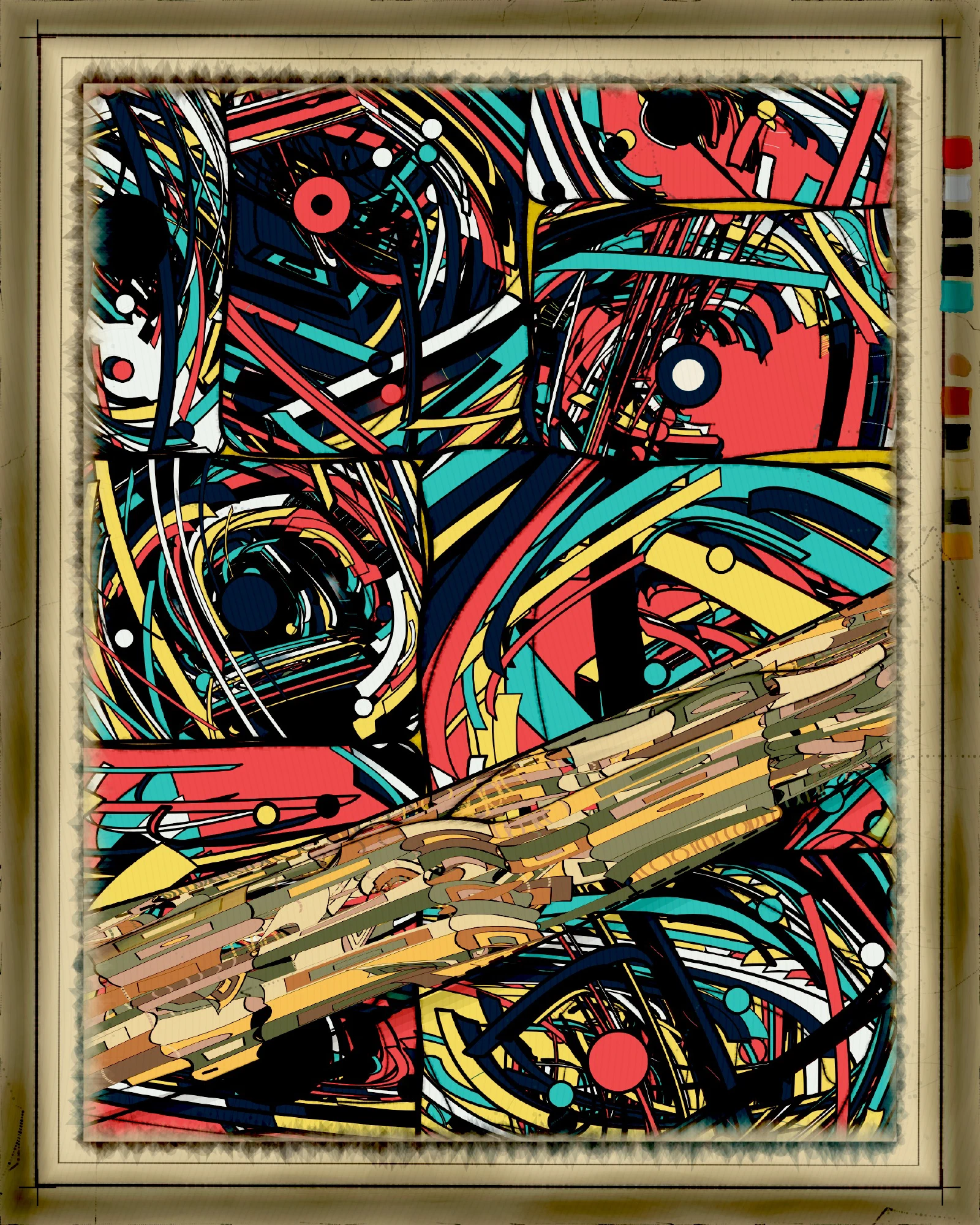
Out of Register was never started. It was taken. A few months back I forked another of my pieces at its third version and carried the copy off in its own direction. For a long while it stayed in the studio, and when it finally went out into the world it went as images with no words attached and no name. I referred to it by its folder number. A name given early decides what a thing is before you know, and I wanted to find out first. It took twenty nine versions to earn one.
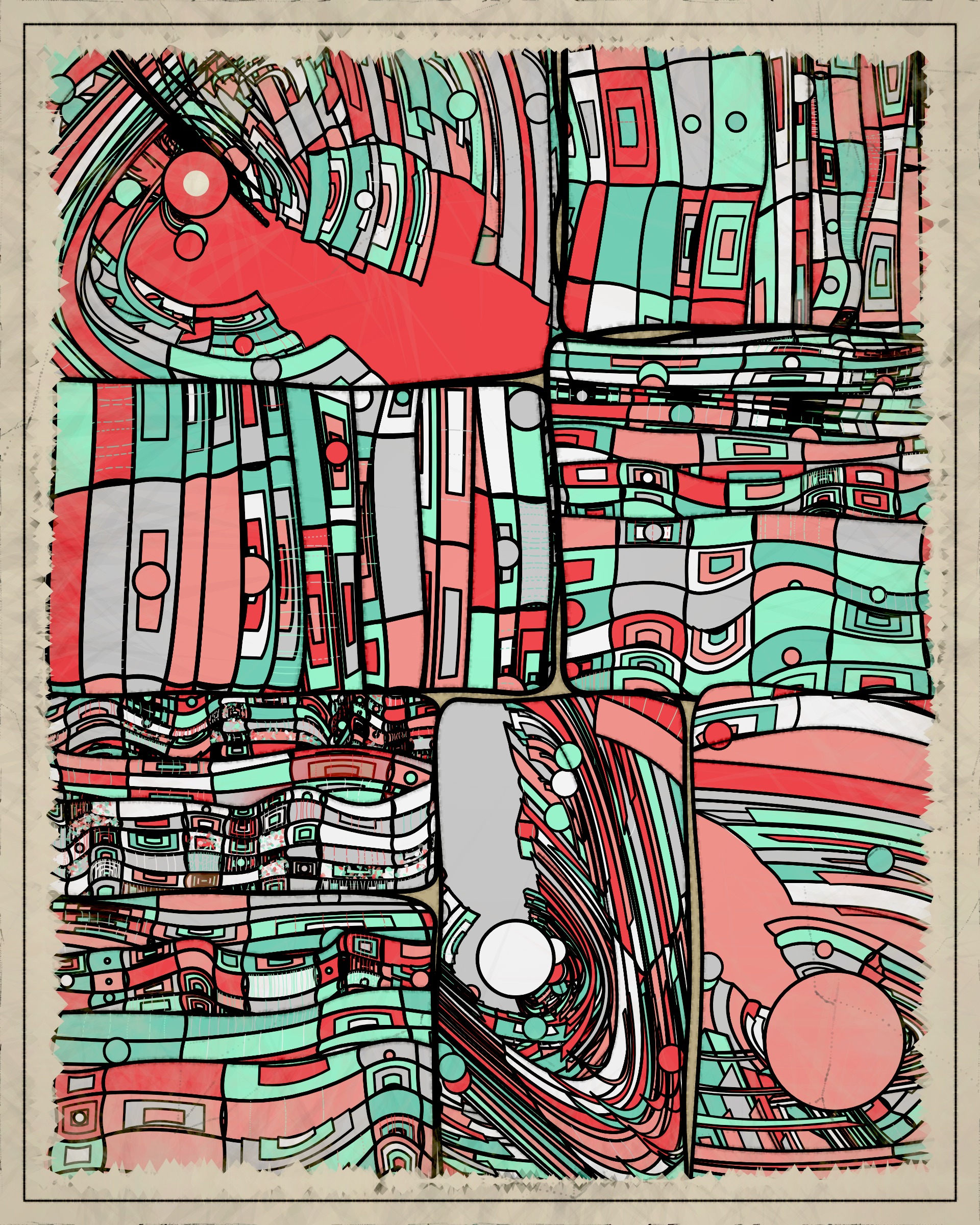
The bones were there from the first day. A field of banded blocks is laid down across the sheet, oversized and pushed off centre, so what the sheet carries is a crop of something that plainly continues past every edge. No join lands cleanly on a block edge, and every block has turned on its own, so the field reads as continuous rather than as a grid. That was the inheritance from the parent work. Everything after it was a month of finding out what this piece, specifically, refused to do.
The refusals took time to see because I kept adding before I learned to take away. Over the run I built whole layers and then deleted them: drawn line work across the field, repairs laid over damage, creases where the sheet had been folded, holes worn clean through, a folded corner with its ghost flap still attached. Every one of them worked. Several of them I liked. They all went, because the sheet kept getting busier and the piece is better quiet. A great deal of what this work is comes from what was removed from it.
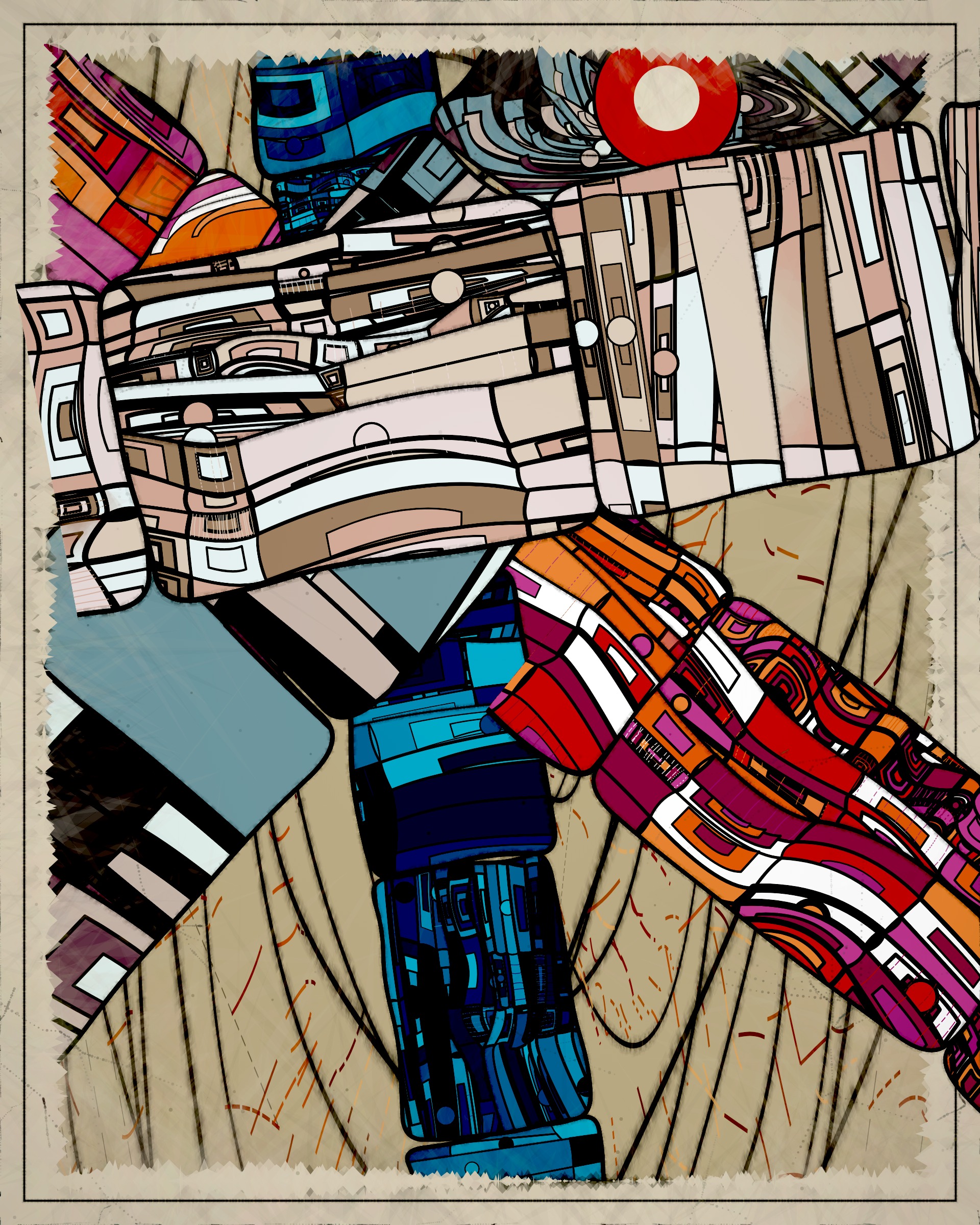
The middle of the run turned into study weeks. Early August I stopped making whole sheets for a while and made arguments instead: an edge study, two rule studies, two layer studies, a mark study, a stack study, each one a version that held everything still except the one question it was asking. The rule study settled the border. Ruled dead true it goes dead, so the ruled line sits a fraction off the sheet’s true grid, a rotation under a degree and a couple of pixels of drift. The layer studies settled the order of the air. The mark study settled what the margin was allowed to hold.
The colour was never picked so much as dyed. A vat is chosen for the sheet and a cloth is drawn from it, and if the cloth comes up muddy or too quiet it goes back and is drawn again from its own separate stream of chance, so a poor draw is re-dipped instead of accepted. The second cloth has to argue with the first without shrieking at it. Some sheets are then dipped for real: one edge goes into the colour, crooked more often than square, and everything below the tide line takes it together. A sheet can open in one palette and have completely become another by the bottom, block by block, the way a printer runs out of one ink while mixing the next.
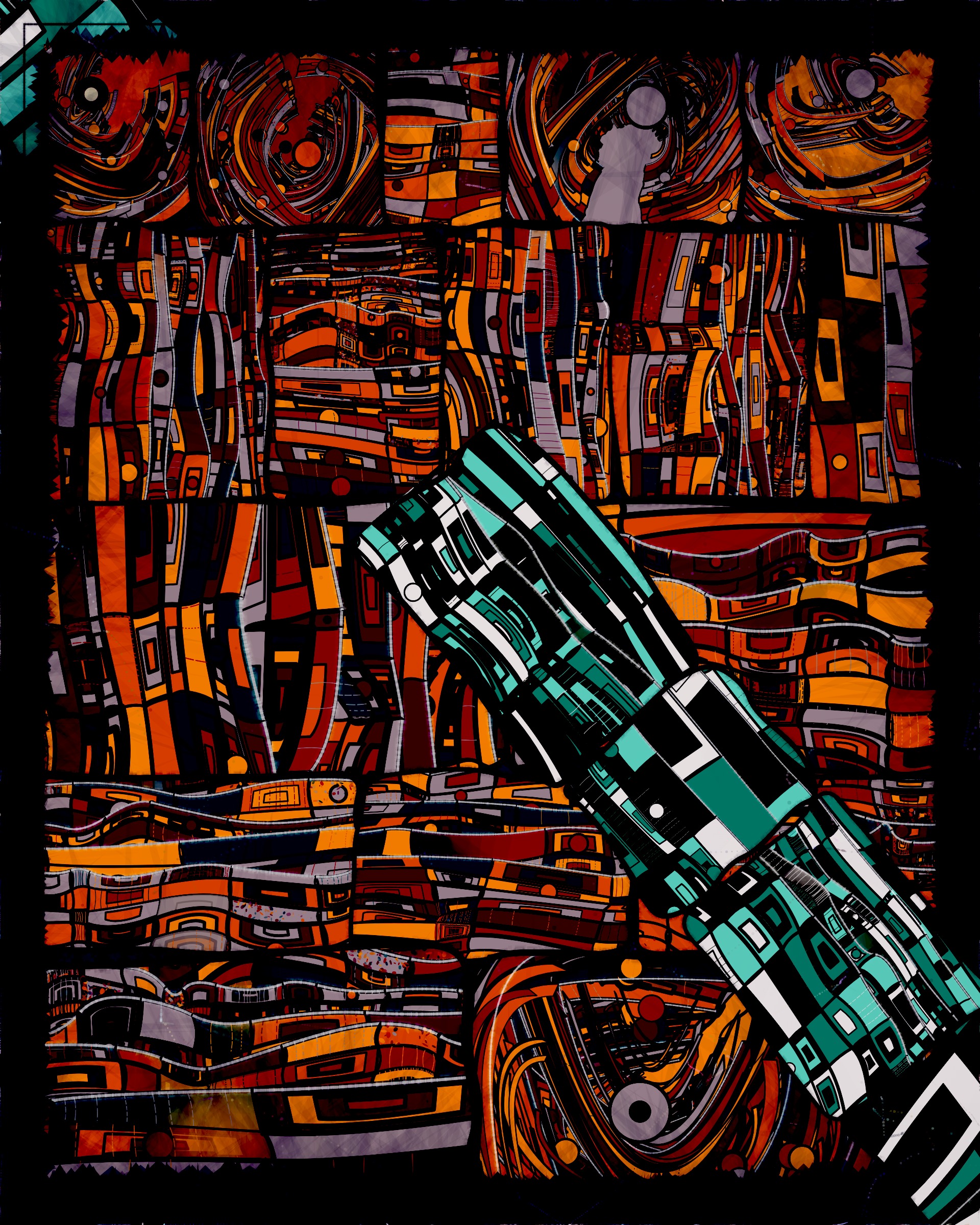
I could not have written those rules at the start. I found them by rating sheets, one at a time, for weeks. Across four rounds I scored seven hundred and seventy nine sheets by hand, one to five, and after each round I changed the rules to chase what the scores were telling me, and the average of the edition climbed from about 2.9 to about 3.9. The uncomfortable part is what the rounds kept hiding from each other. For three of them I was certain the sash was the problem, the wide band that crosses most sheets, and I kept shaving it back. It was not the sash. It was one particular cut inside it, a heavy slab that did nothing for any sheet it landed on, and it only became visible once the louder faults around it were fixed. Each round can only show you the fault the last round stopped hiding. I removed the slab and left the sash alone.
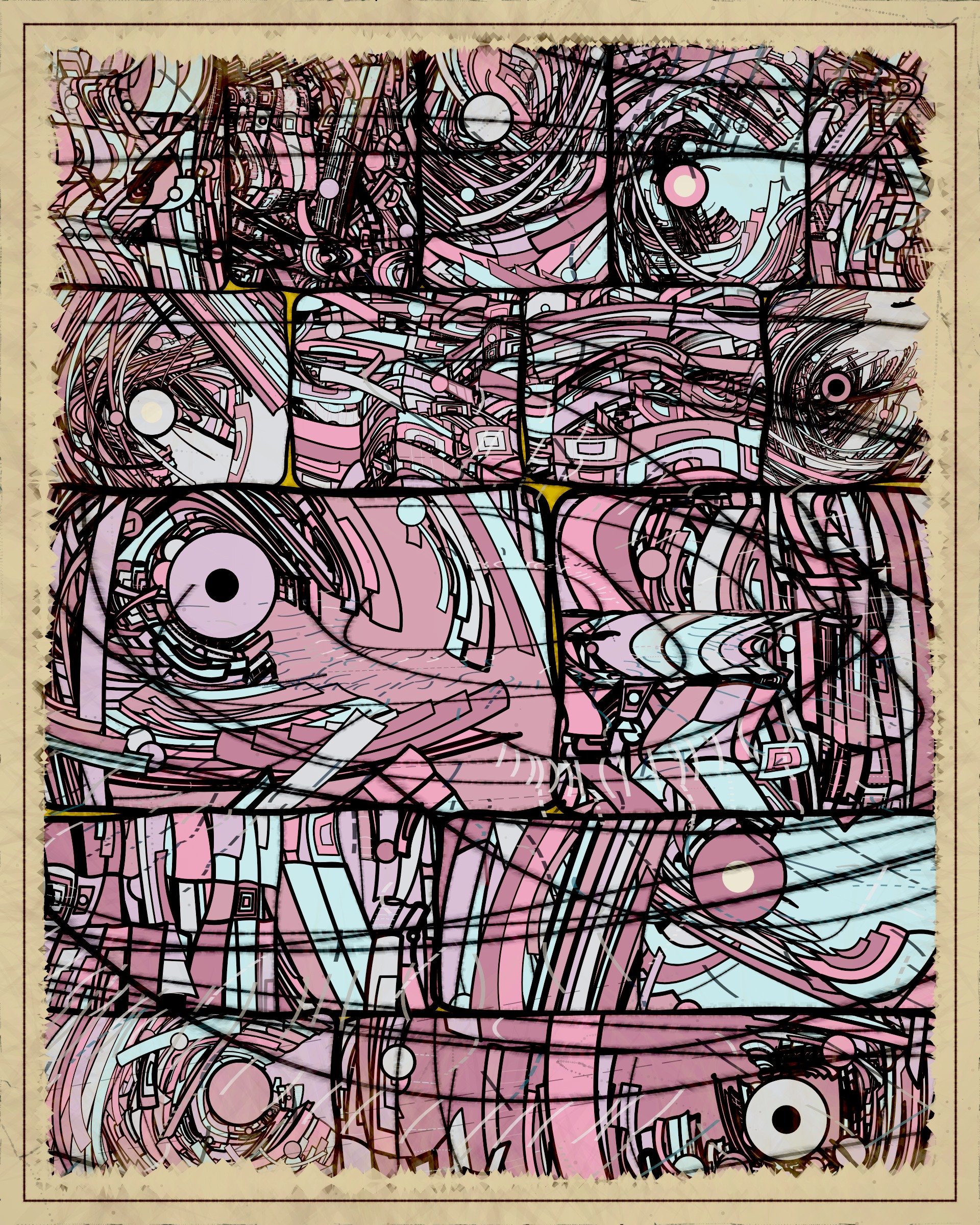
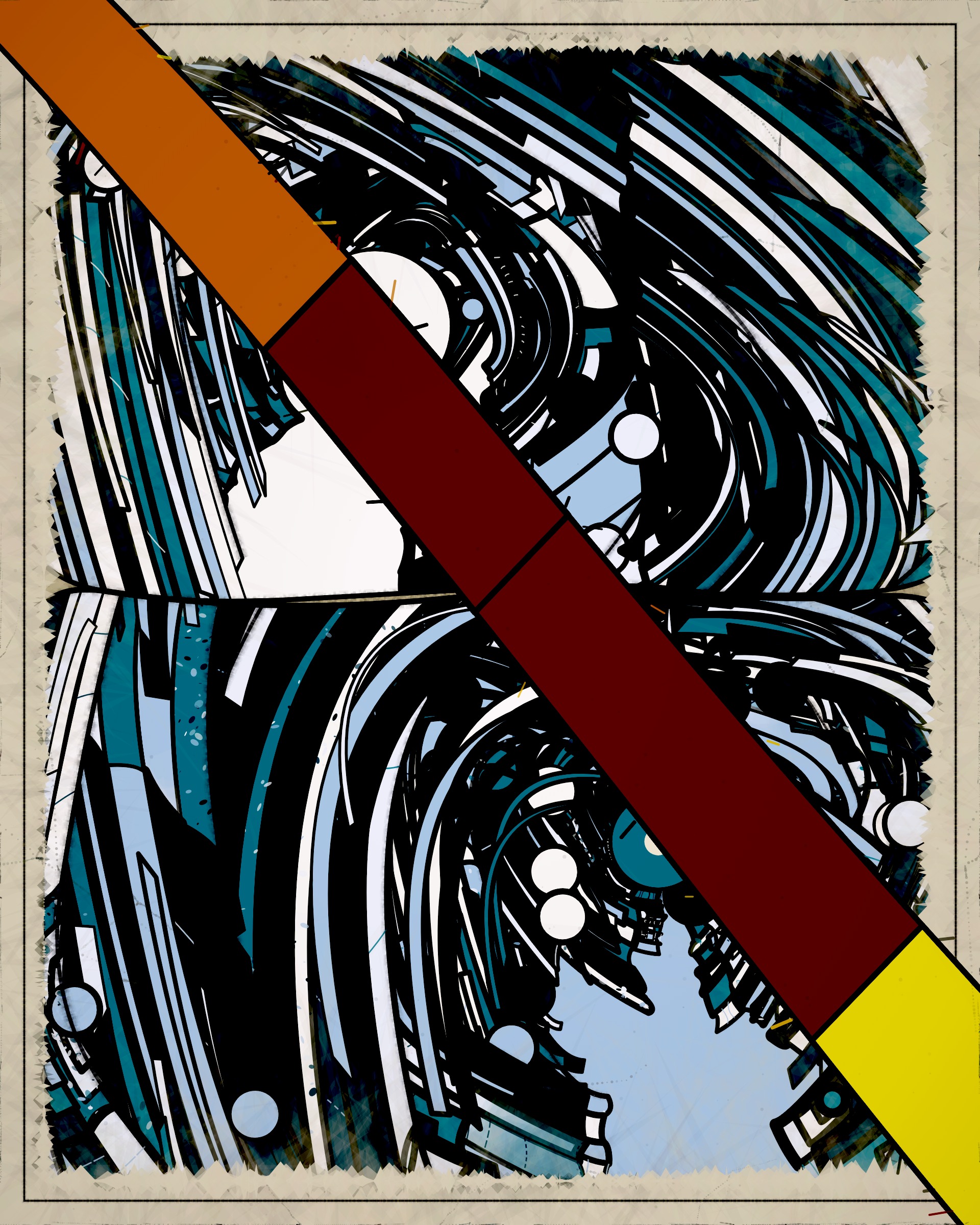
The sash stayed because its one real question turned out to be the whole piece in miniature. A band that crosses the entire picture has to decide what it does about the frame: pass under it and let the picture hold it, ride over it and off the sheet entirely, or do one at each end, which is the strangest of the three and the reason it exists. Nothing else in the work agrees with anything either. The border sits off the grid. The field is laid off phase. The blocks have each turned their own way. I had been doing all of this separately for weeks before I noticed it was one thing.
The name came from noticing. Out of register is a printing fault, what you call a sheet where the colour plate lands a hair off the black and the image doubles at its own edges. Here it is not a fault, it is the method, and once I had the phrase I could not unsee it. Nothing in the piece lines up, and that is what holds it together.
The sheet itself is composition, not a mount. Edges are torn or deckled, a plate mark presses into the paper, the margin carries swatches and registration marks and the occasional ink test, and a signature seat waits in the corner. A third of the edition is not signed at all. At the end the ageing comes over everything, foxing and crinkle and a veil of faint strands, and that is not there to make the paper look old. It is the last colour decision in the piece, the one that pulls every mark into the same air so they belong to the paper rather than sitting on top of it.
All of it comes out of a single number. The token hash is split into separate streams so that colour, layout, frame and atmosphere each draw from their own source, and a change to one does not reshuffle the others. And all of it is vector from the first shape to the last, which means the work has no fixed size. The instructions are the piece, and the instructions are infinite.
Out of Register opened on 21 August as an edition of 512, cut back to 32, and it is gone. Twenty nine versions, months without a name, seven hundred and seventy nine rated sheets, and a title that was there the whole time, waiting to be noticed.