Getting ready to release Pattern Collapse on @bootloader_art
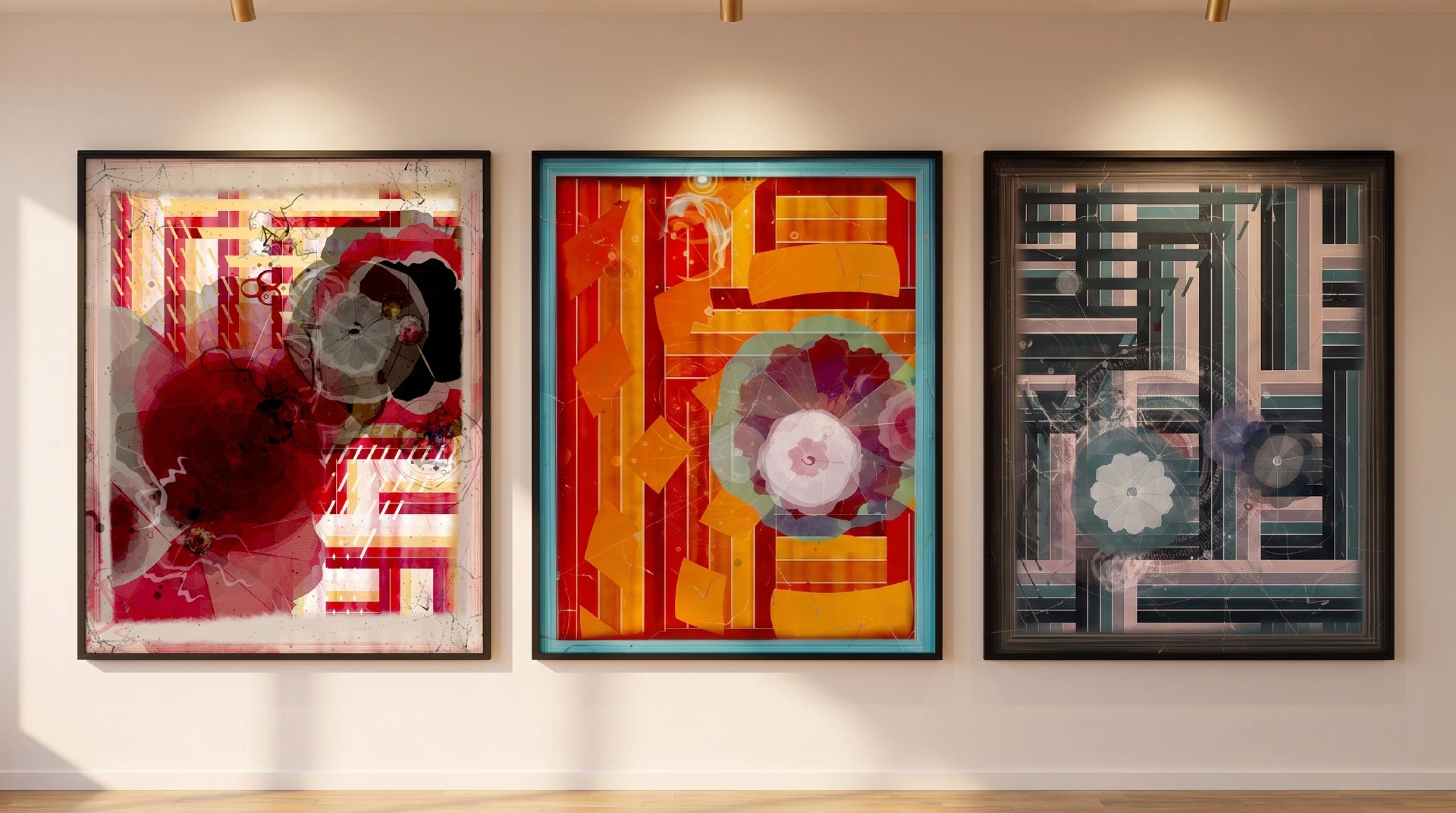
For most of its life this piece did not have a name. It went through eight versions as Untitled, a study I kept copying forward and pulling apart, before it earned the title Pattern Collapse. The name came last, after the thing already existed, which is the right order. I was not illustrating an idea called collapse. I made a grid, spent months breaking it, and only afterward found the word for what I had been doing.
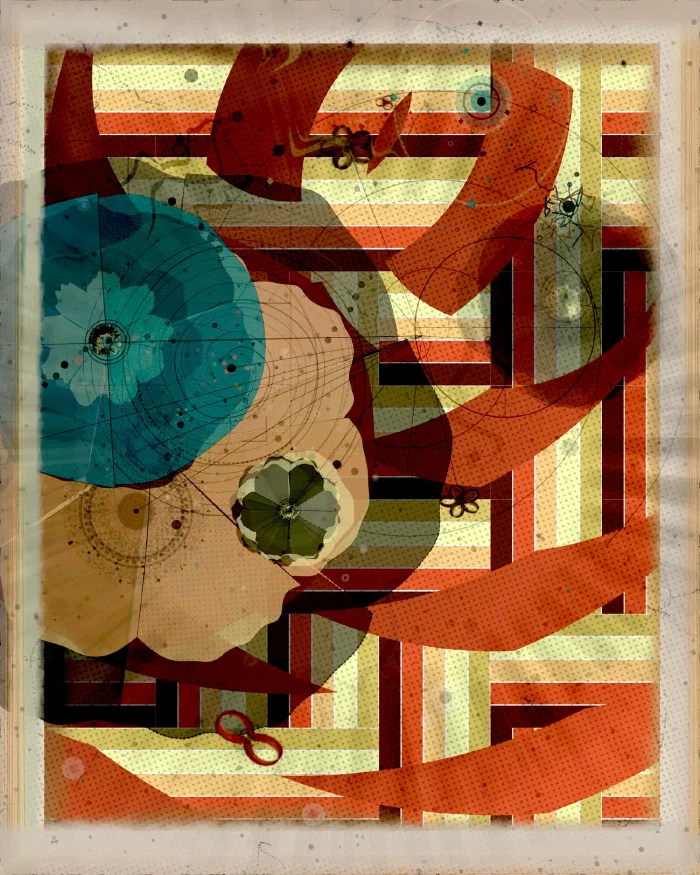
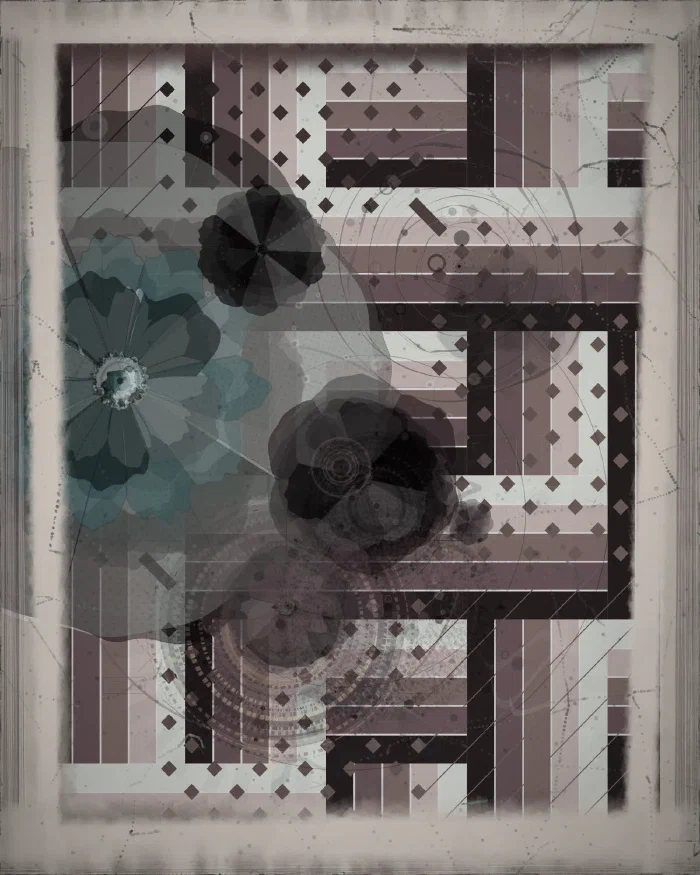
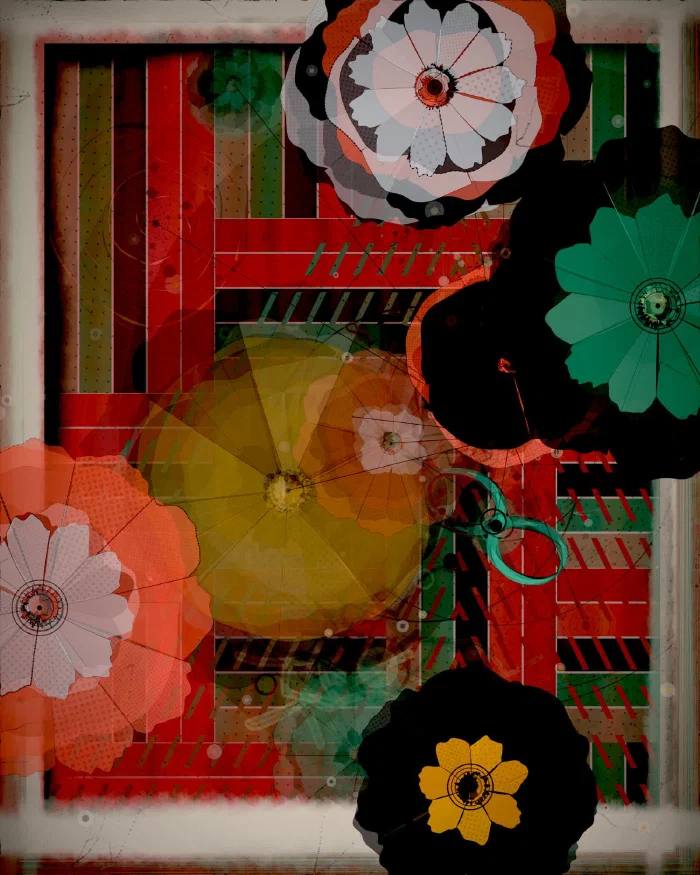
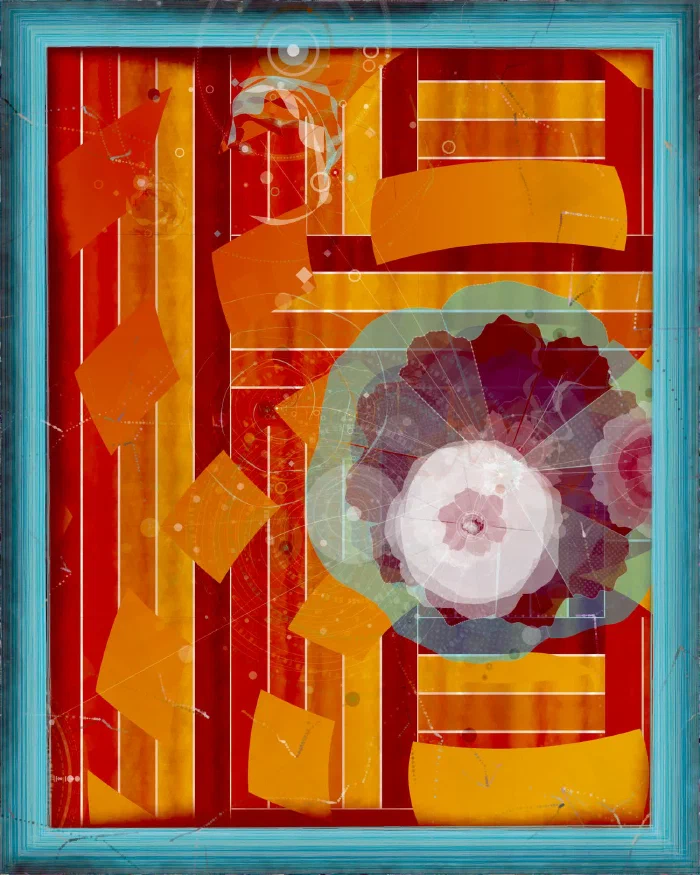
It started where a lot of my work starts, with a grid and a refusal to leave it alone. Fifteen tiles by fifteen, each one striped with the bands of a single palette. That is the order. Everything after that is the undoing of it. The grid is scaled down and pushed off centre until it overruns every edge, so you never see the whole thing, only a window onto a field that clearly keeps going. Then a sheet of colour is laid over it, and the tiles survive only where concentric shutters are cut out of that sheet, rings and squares opening from two centres that do not agree with each other. Where they cross, the pattern interferes with itself. Each tile has also turned ninety degrees on its own, so even the fragments are regular in place and unruly in direction. An early note I wrote for it called it symmetry meeting abstraction, without the need for deeper meaning. I still think that is the truest thing I have said about it.
The version you can mint is the end of a second, quieter story, which is the rebuild. The piece began in one framework and was aimed at a different platform entirely. To bring it fully on chain I rebuilt it from the ground up in my own tooling, and that changed the rules of the work in a way nobody sees. On a fully on chain platform every byte of the program lives on the blockchain, so the code itself has to be lean, and it has to stay lean without the picture changing. I halved polygon counts, batched filters, and stripped weight out of the machine, over and over, with the strict condition that the output stay identical down to the seed. The piece you get is the same piece, drawn by a smaller and more disciplined program than the one I started with.
The part I cannot be reasonable about is the colour. Pattern Collapse carries four hundred and seventy six palettes, and they are not dropped in at random. Two are chosen per piece and scored against each other, because some pairings sing and most do not, and I could not tell you the rule in words. I found it the slow way, by sitting with a couple of hundred sample pairings and rating them one at a time until the machine had absorbed the part of my taste I cannot explain.
All of it comes from a single number, the token hash, split into four independent streams of chance so that colour, layout, frame, and atmosphere each draw from their own source and none disturbs the others. And all of it is vector, from the first shape to the last, which means the work has no fixed size. The instructions are the piece, and the instructions are infinite. It can live as small as a screen or as large as a wall and lose nothing on the way up.
Deterministic SVG drawn from the token hash, rebuilt from the ground up in Dart for a fully on-chain release. Custom renderer, no drawing libraries. 476 palettes, chosen and scored in pairs.
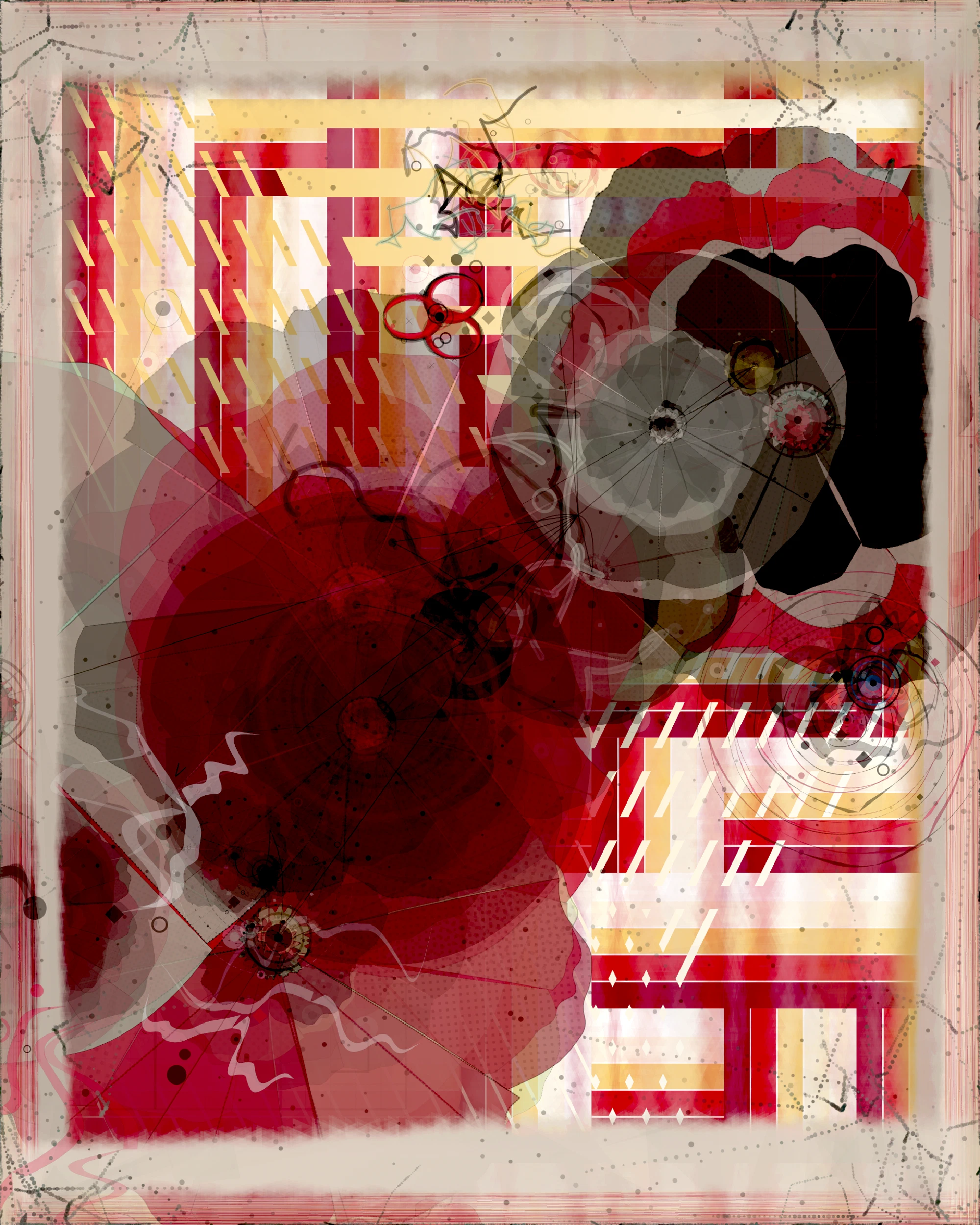
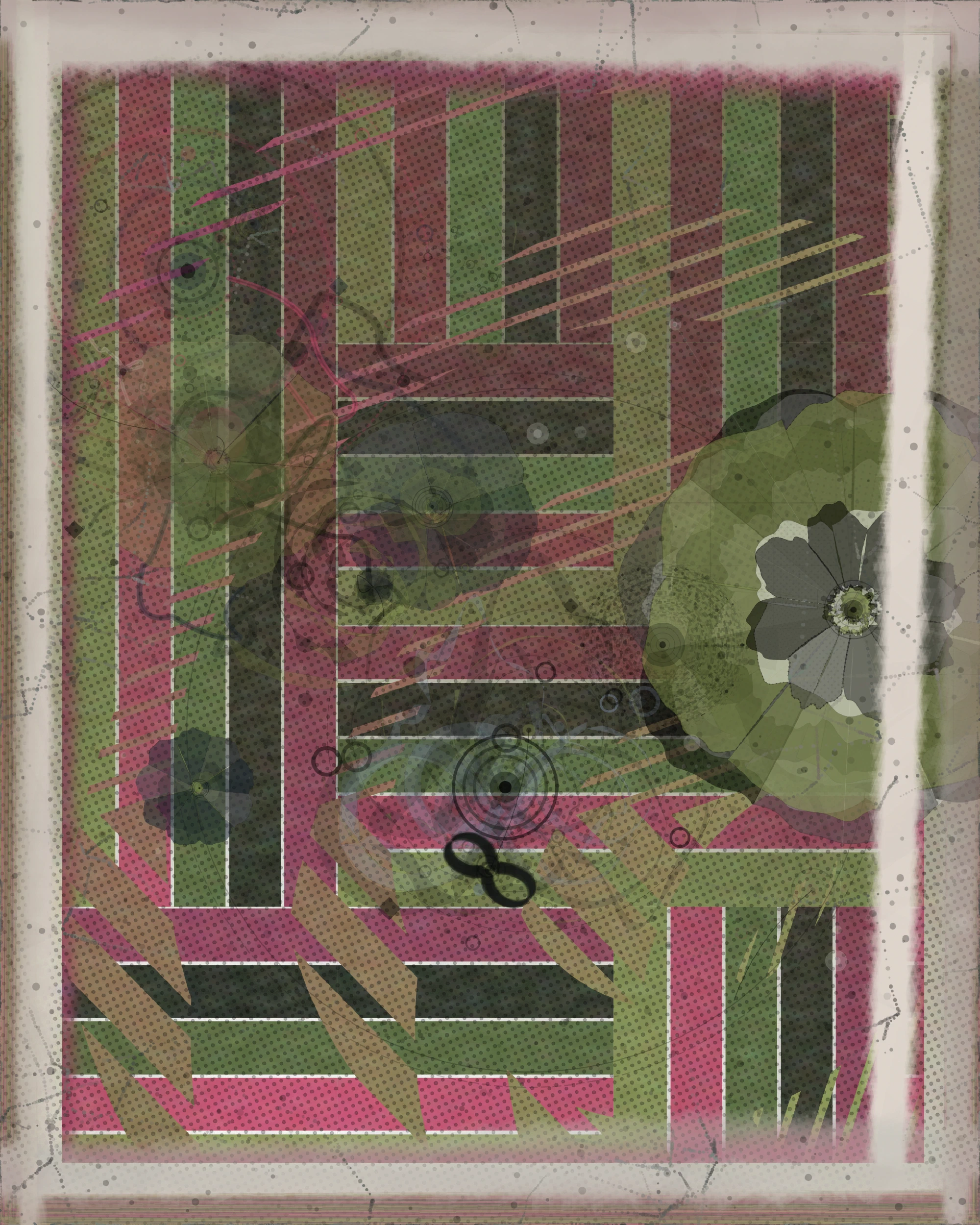
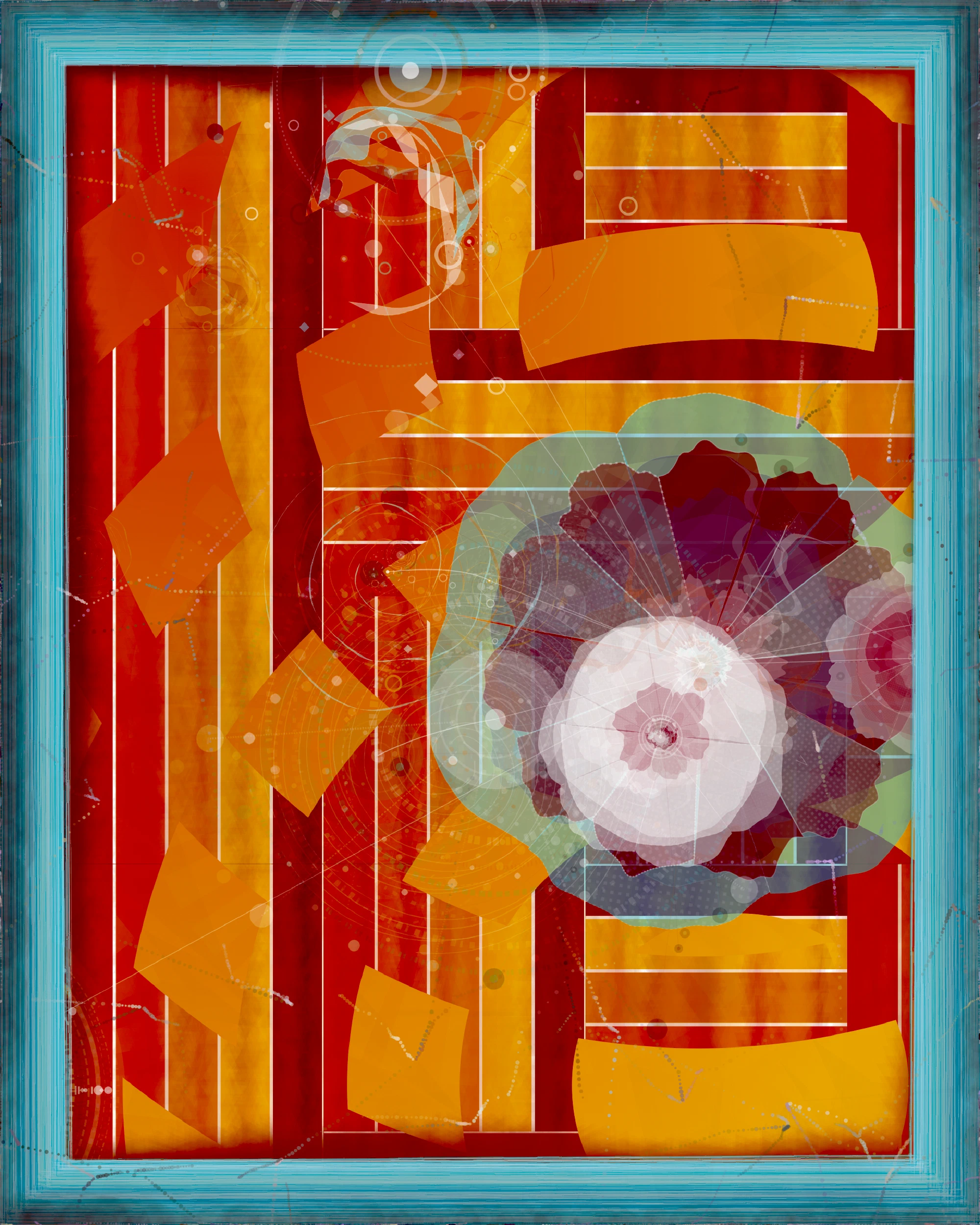
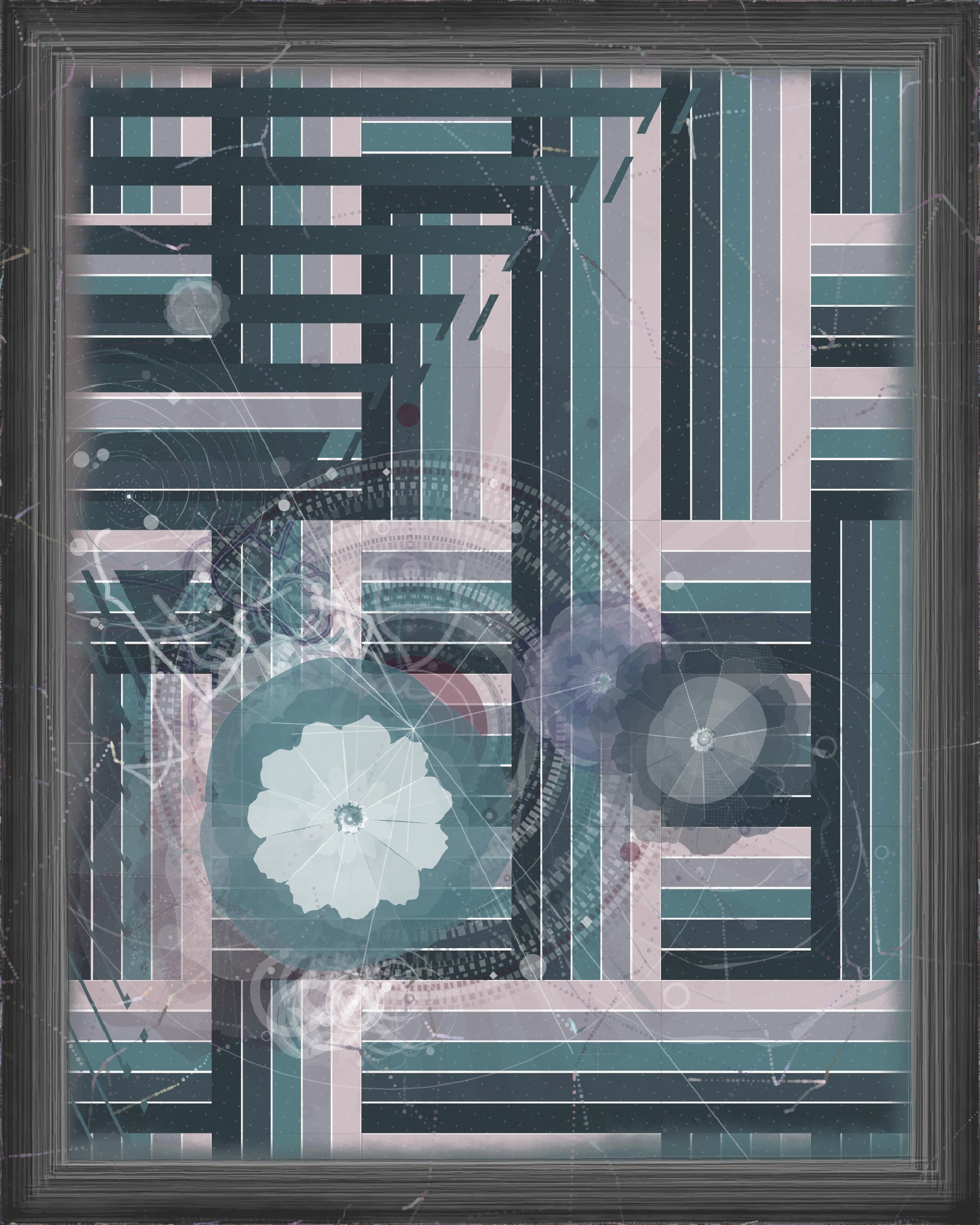
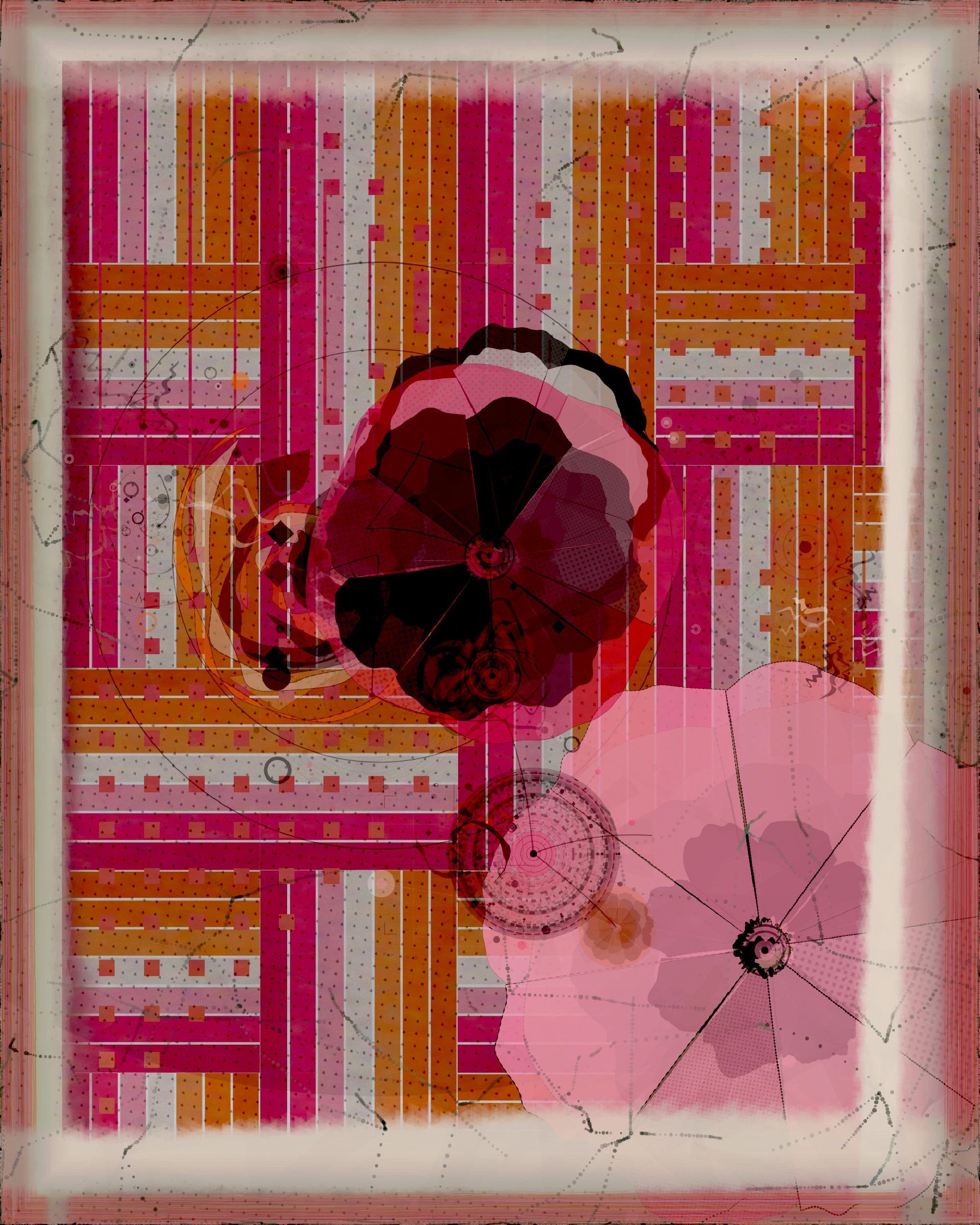
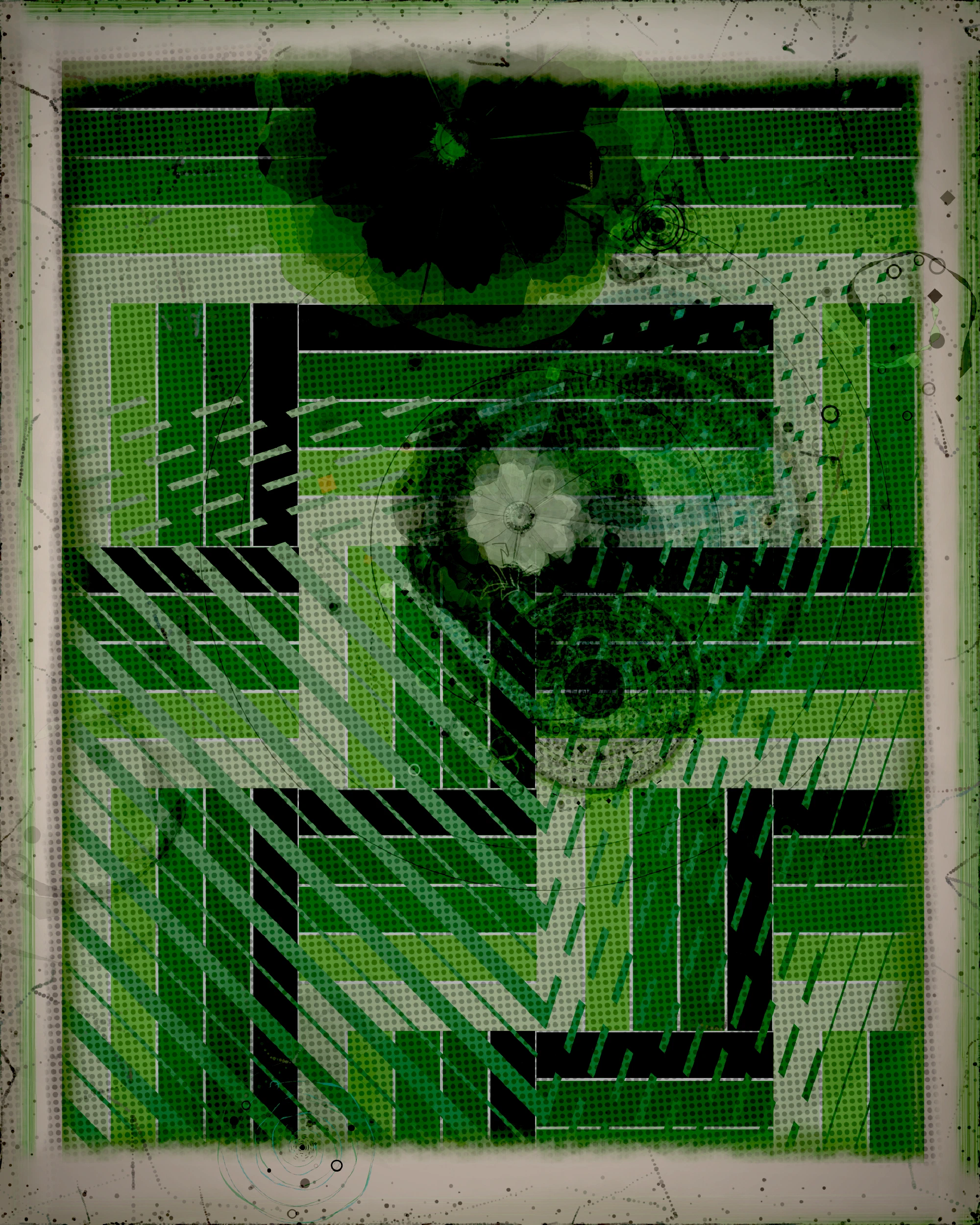
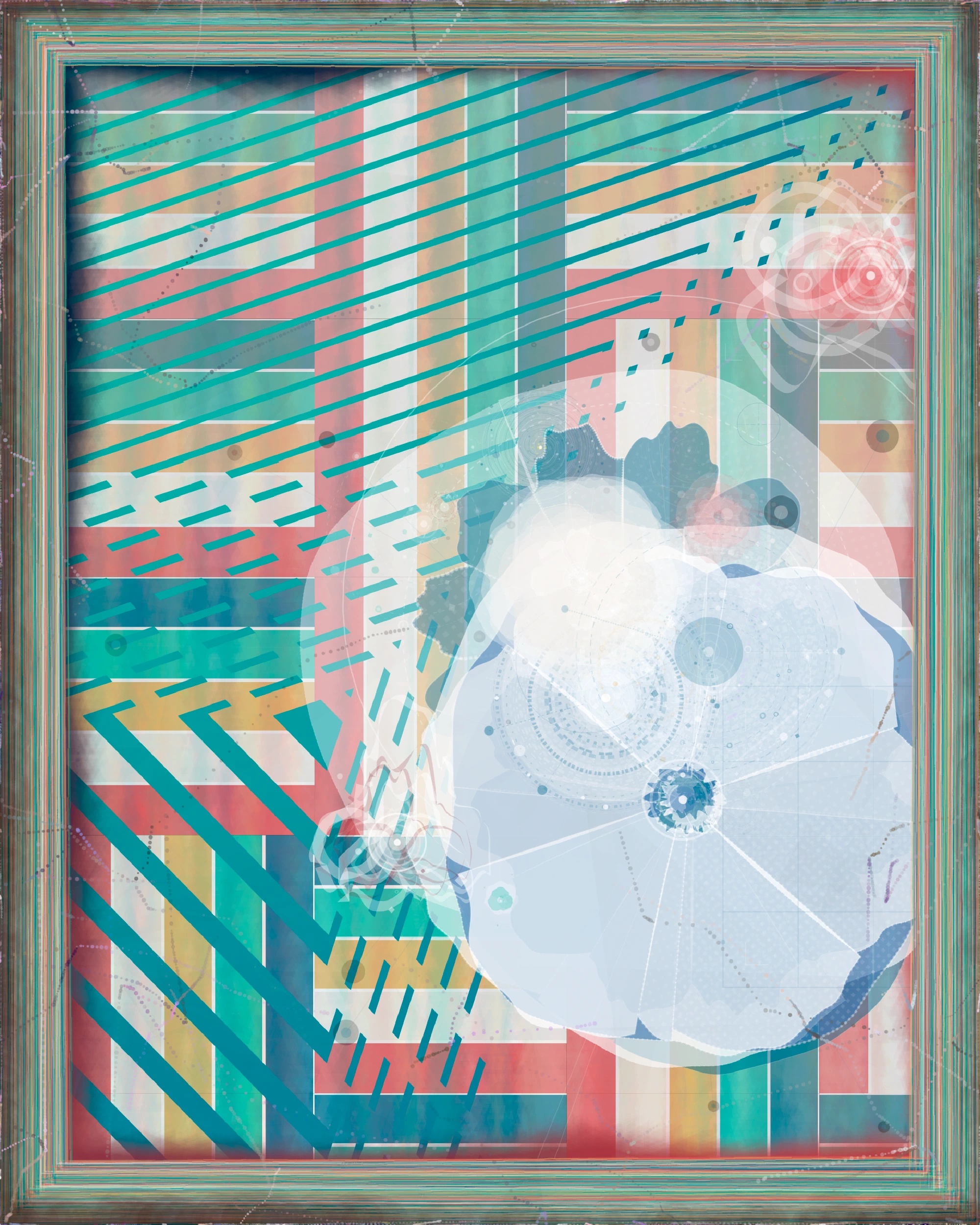
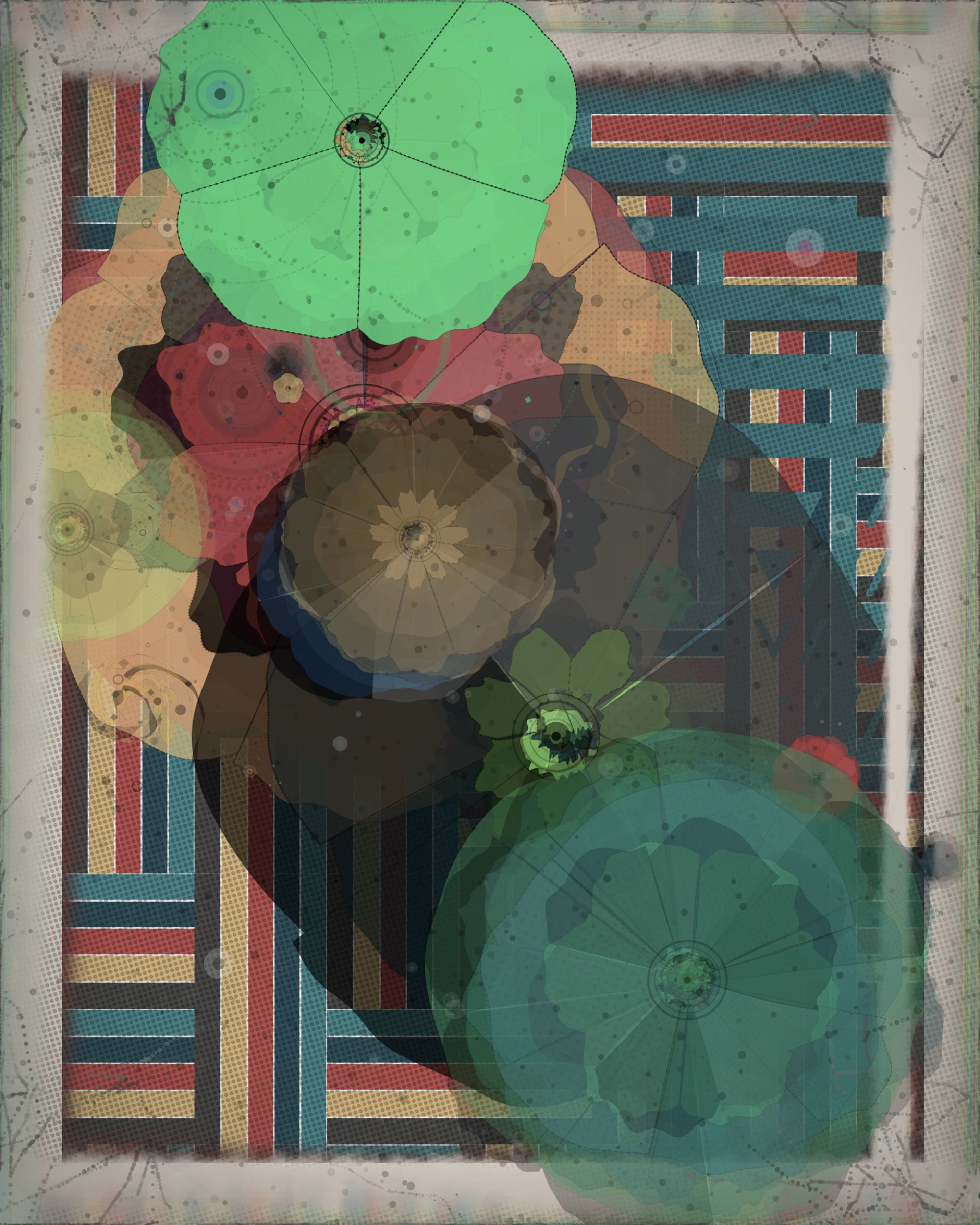
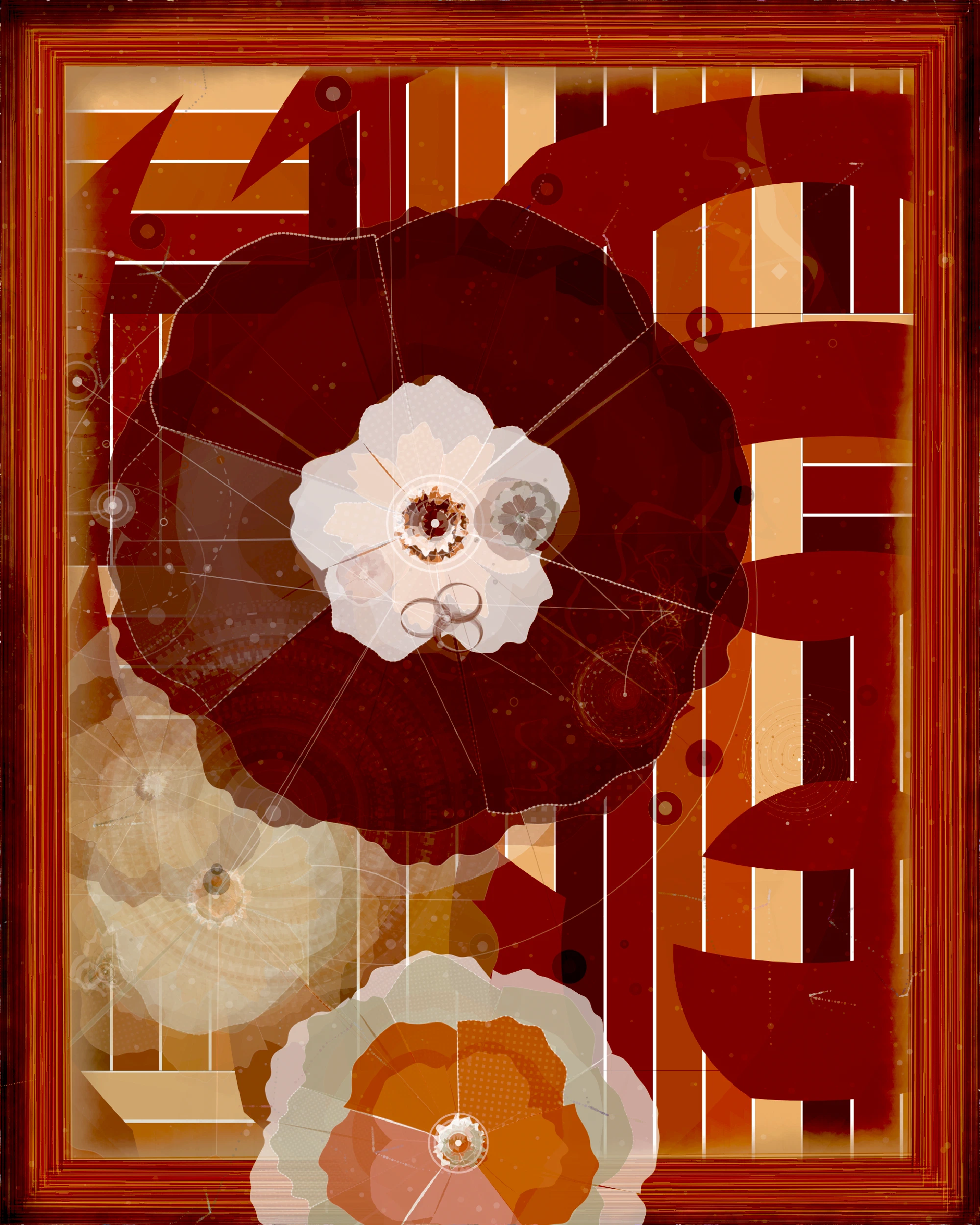
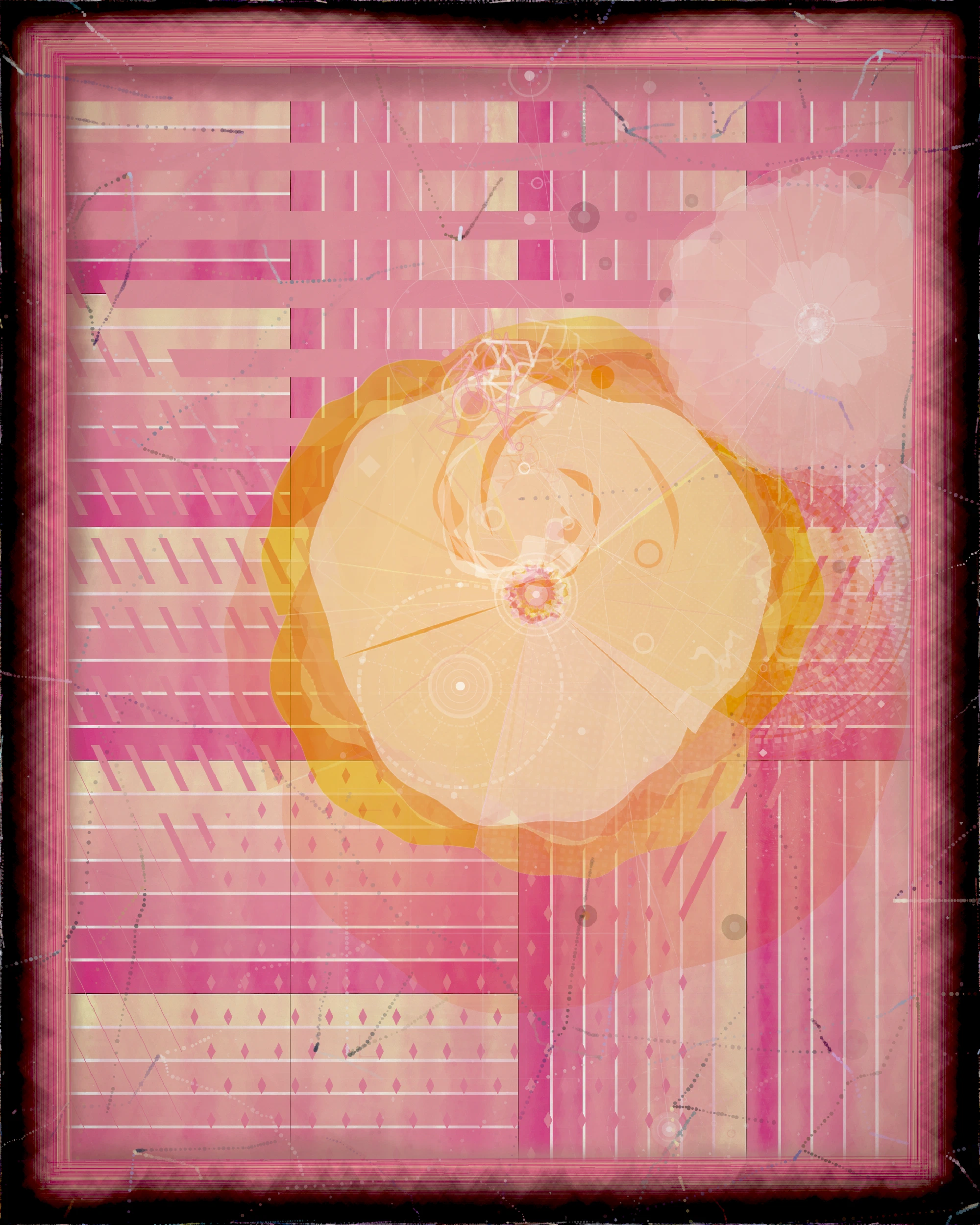
Every one that has been minted, each with the seed that drew it and the code to run it again.
Prints of minted iterations are available on request. About prints