Why Nilo
Nilo is a small language for generative art. It is written by AI so that I can code by hand.
I write a piece in it as a short, plain file. Nilo turns that into a tiny file that ships, and I never have to look at that one.
The art comes first
Nilo exists for the art, so that is where to start.
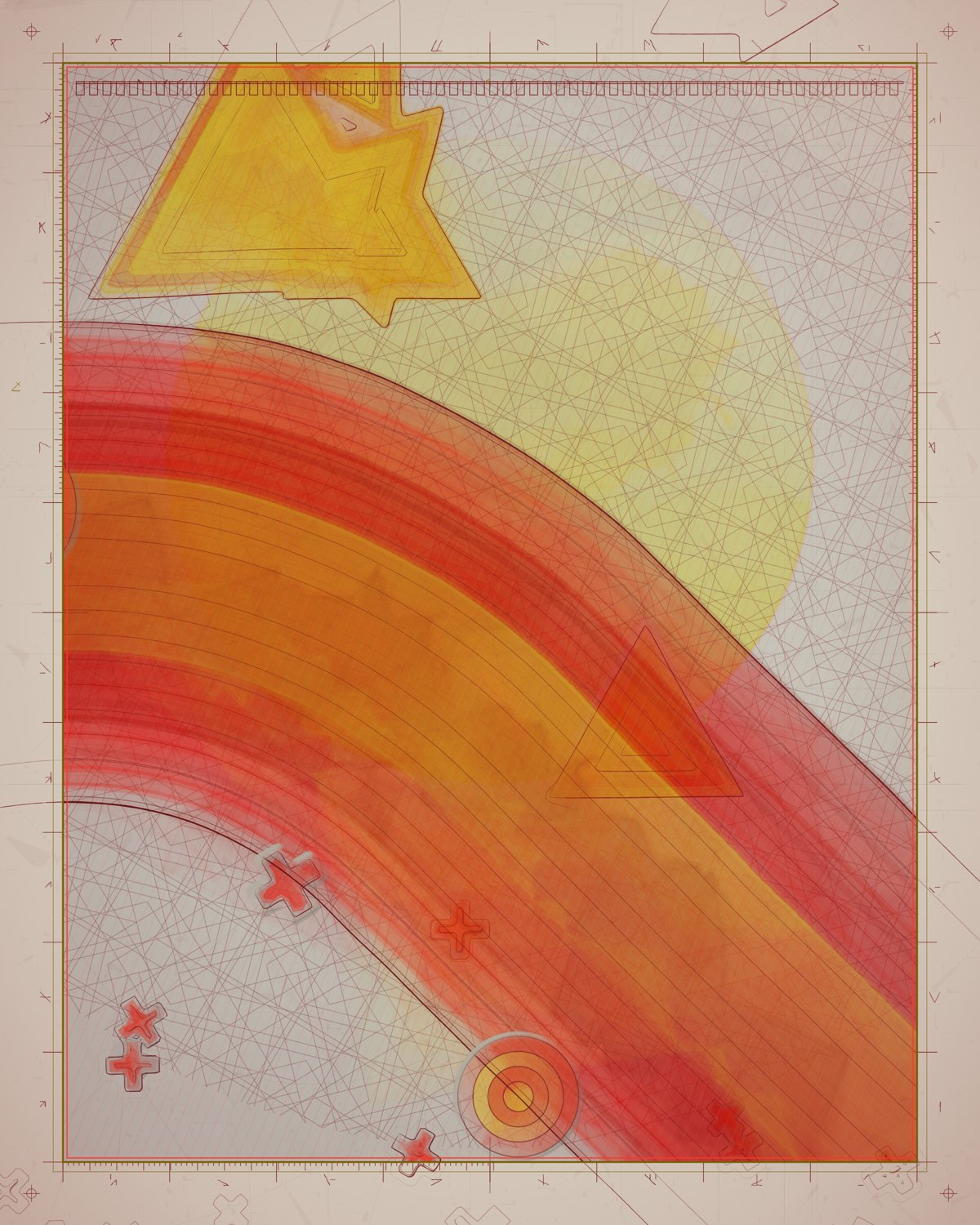
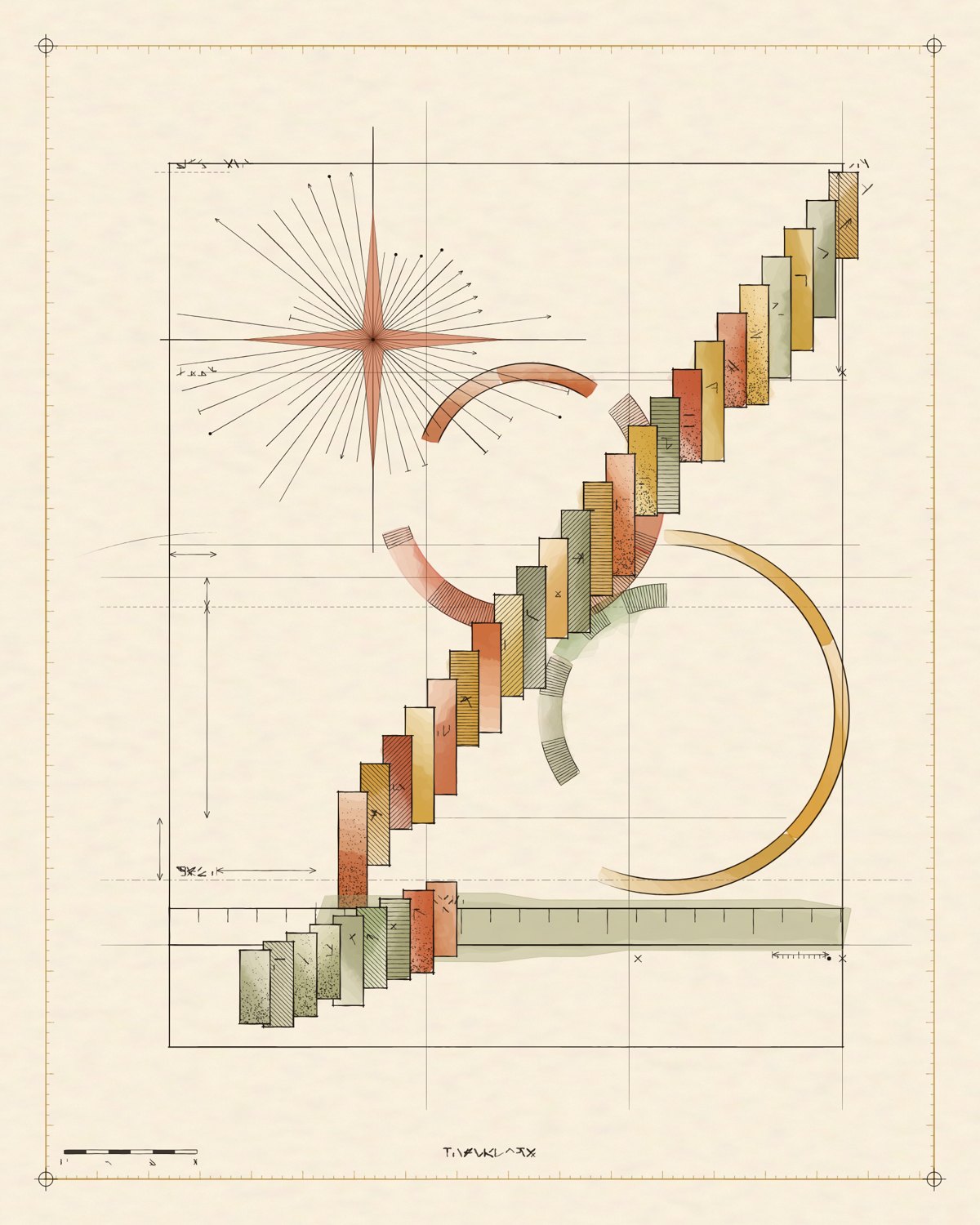
Two of my released works, Ground Truth and Set Out. Neither was made in Nilo. They were made with the tools I have now, and they are the kind of work Nilo is being built for. There is more on the works page.
I make my work in code, and I make it by hand. Writing a piece line by line is how I find it. I change a number, the sheet changes, and now and then something turns up that I did not plan and would never have thought to ask for. Those accidents are a large part of why I do this. If someone else writes the piece, I get what I asked for and nothing more.
The work is paint and brush, paper and plates, and a great deal of colour. It is made as vector, because vector has no fixed size: a piece can be printed as large as the wall allows and stay sharp.
A piece is a program, not a single image. It is released as an edition, and every copy is made by the same program from its own number, called a token. The same token always makes the same work. So what I am really shaping is the whole range of what a piece can become.
I make it to please myself first. That is why the line I draw with AI matters to me. It can build my tools. The art is mine to make.
Where it comes from
I’ve made generative art for more years than I care to admit, and used nearly everything: Flash, Processing, openFrameworks, vvvv, TouchDesigner, Cinder, Java, Go, nannou. Every time, I ended up building my own tools on top. The current set lives in Dart, with a custom pipeline.
Lately the whole conversation is about AI. Will it replace us, should artists use it, is the work still yours if it writes the code. I came at it from a different angle. What if I could use AI to help me develop an expressive language? One that keeps me relevant, and lets me keep crafting by hand.
So Nilo is the same thing I have always done, building the tool I wish I had. The difference is who does the heavy lifting.
What I wanted in it
- Expressive. Say what the art is in as few lines as possible.
- No plumbing. No seeding, no canvas setup, no build steps. It just does those.
- Tiny. Only what the piece uses gets shipped. No framework comes along.
- Made only for creative work. Nothing in it is there for any other kind of program.
- A sketchbook feel. Save the file and the art updates.
- Nothing hidden. The libraries are written in Nilo too, so I can open the brush and change how it paints.
It sits somewhere between a language and a toolkit. I write in it like a language, and it comes with the things I reach for: noise, colour, brushes, a sketchbook.
Right now it is completely dedicated to how I work. It isn’t a general tool. It’s built around one person’s habits, on purpose.
Why not just use JavaScript?
The honest answer: I’m good at it, and I hate writing it. Always have. It isn’t typed, it lets me make silly mistakes without a word, and nothing about it feels like it was made for what I do.
The grown-up answer is that you can fix most of that with TypeScript, a drawing library, a bundler, a minifier, some lint rules, and discipline. That works. Here is what it still doesn’t give me.
- One tool, not six. That setup is a stack of other people’s projects, each changing every year.
- A compiler that knows what I’m making. It proves an animation loops with no jump, or refuses to build. It guarantees the same token always makes the same art.
- A vocabulary that costs nothing until I use it. A library ships whether I call it or not. In Nilo, a brush I don’t use adds nothing to the file.
- A language that bends to me. This is the real one. In any other language I shape my thinking to fit it. Here, when I need a new word, I ask for it and it gets built.
What it looks like
A piece starts by naming its sheet, its libraries and where its random numbers come from:
plate(1920, 2400)
use noise v1, colour v1, brush v1
random layout, paint, marks
And this one line is a whole painted stroke, dozens of fine streaks with tapered ends:
brush.sweep(marks, path, width, tone, opacity: 0.8, body: 0.5)Both come from a test piece of 35 lines.
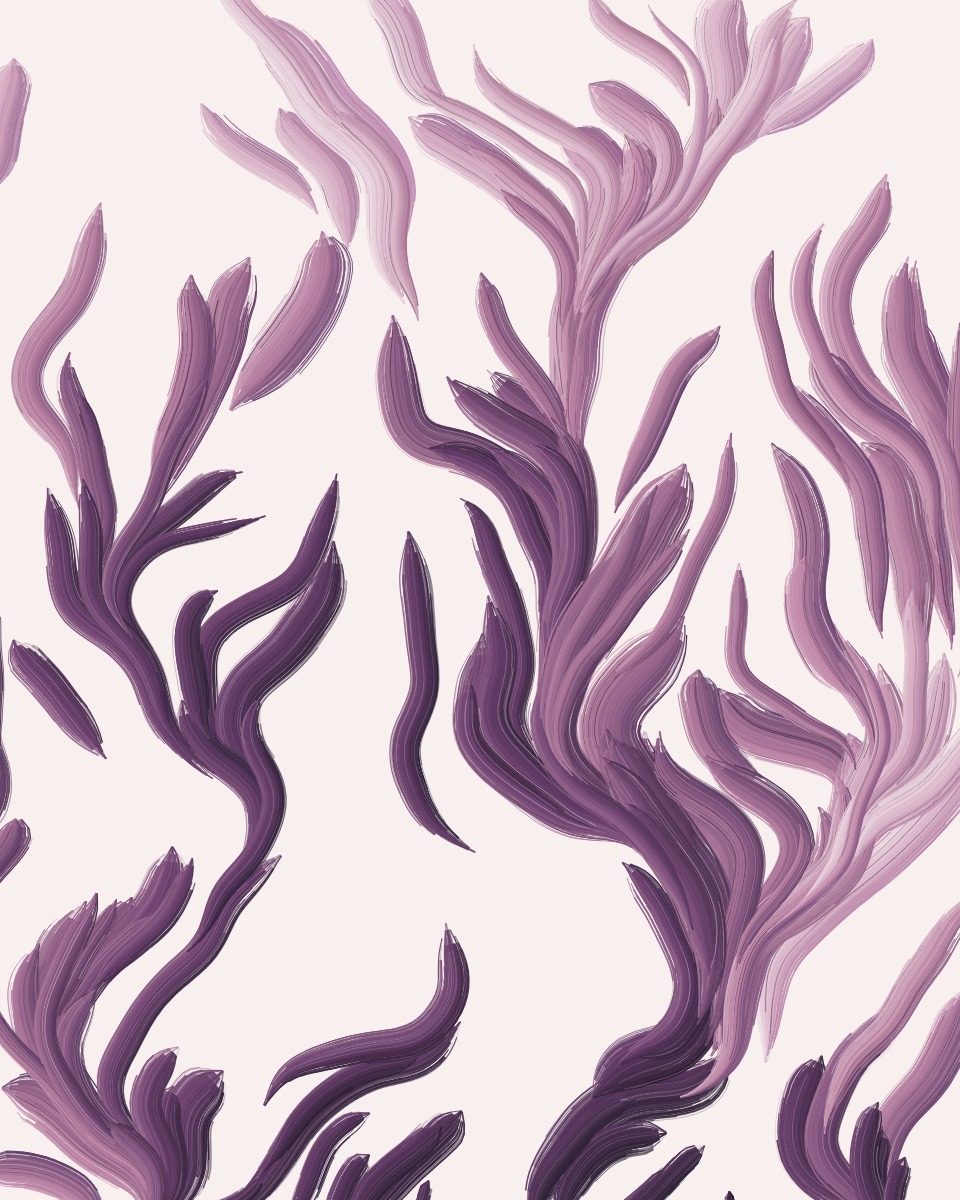
It is a test of the brush, not a finished work. The whole piece is on the examples page, with its source.
How small
That test piece ships at 5,449 bytes, about five and a half kilobytes, with everything it needs inside. My work goes on chain, where every byte is paid for, so this matters.
To be straight about it: an expert squeezing every byte by hand will beat Nilo, by about a quarter on the piece I tested. But ordinary readable JavaScript, shrunk with the usual tools, comes out 18 to 40% bigger than Nilo’s output. So it won’t beat an obsessive. It beats everyone else, and I get to write readable code while it does.
The numbers and how they were measured are in the journal.
Where it stands
It is early. I haven’t yet written a full, releasable piece in Nilo. That is the real test, and it is a while off.
The journal is the record of how it is being made, including what goes wrong. And maybe the whole thing is a terrible idea. I’ll find out.