Nilo
Written by AI so you can code by hand.
A small language for generative art. A model builds it. I draw with it. This is the record of how it is being made, in order.
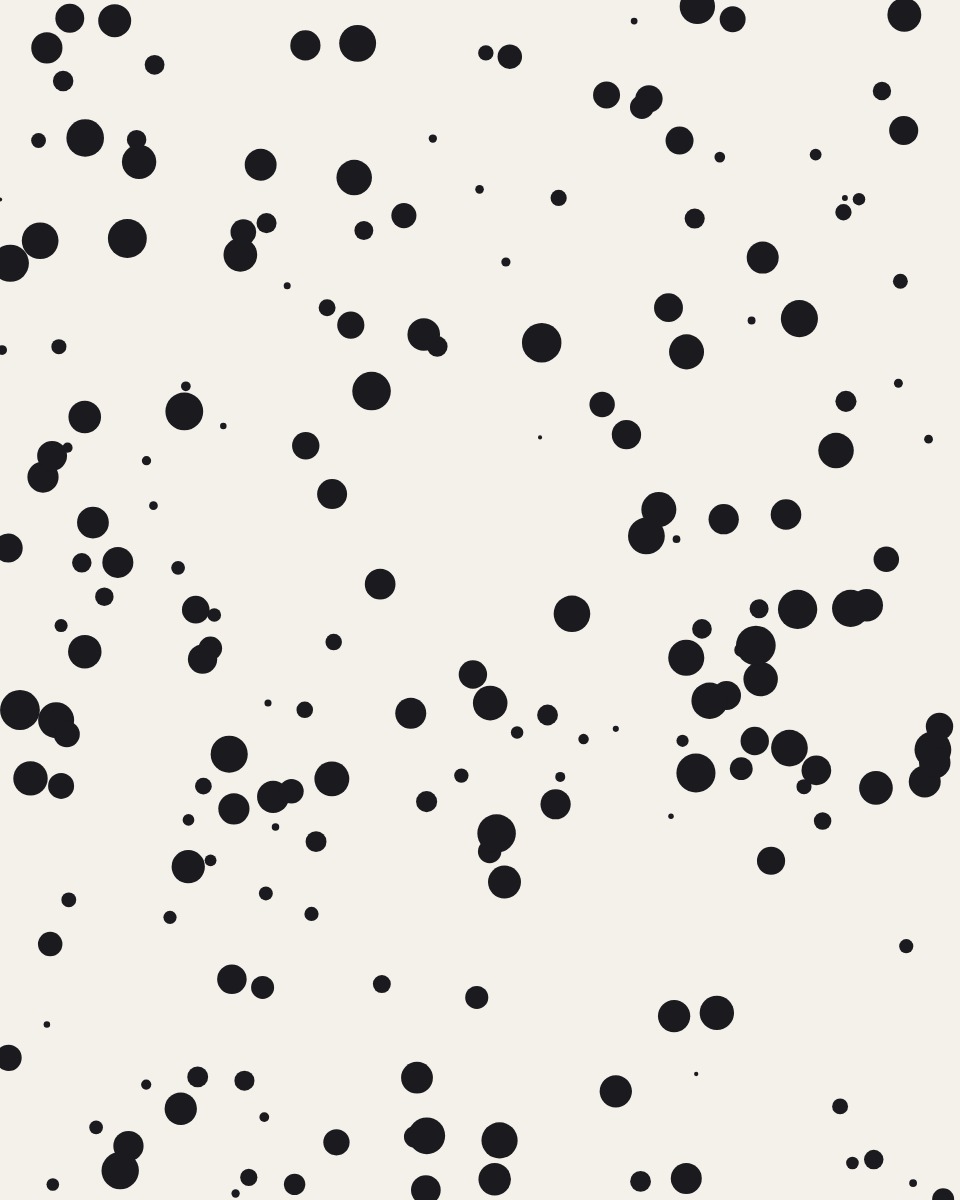
plate(1920, 2400)
random layout

background(#f4f1ea)
for i in 0 ..< 200 {
  let p = vec(layout.float(0 ..< 1920), layout.float(0 ..< 2400))
  circle(p, layout.float(4 ..< 40))
  fill(#1b1b1f)
}
Journal
- 1 Written by AI so you can code by hand I am making a small language for generative art. A model builds it. I draw with it.
- 2 Why not just use JavaScript? Nilo compiles to JavaScript, so why not write JavaScript in the first place.
- 3 One real layer A test on real work: one layer of a finished piece, rewritten in Nilo and checked stroke for stroke.
- 4 The first libraries Noise, colour and one brush, written in Nilo itself, and the first new piece made with them.
- 5 Curves, gradients and groups Three things the language could not say: a smooth curve, a blend of colour, and a set of marks treated as one.
- 6 One command How I know a change to the compiler has not quietly broken everything else.
- 7 Moving the compiler The compiler is written in Dart. It is going to be rewritten in Go, and this is why.